“Garden on an Island: Lucavsala’s Allotment Gardens Between Community Life and Urban Pressure »
Lucavsala Island stands as a compelling example of what urban allotment gardens truly represent beyond their agricultural function: a layered social fabric, an informal heritage, and a form of quiet resistance to the homogenising forces of urban development. Reinis Hofmanis’ photographic work renders visible what city planners too often overlook — the depth of human attachment to these spaces of Nature. As cities across Europe face mounting pressure to densify, Lucavsala reminds us that the most meaningful landscapes are not always the most designed ones. They are the ones that have been lived in, tended, and claimed over time.
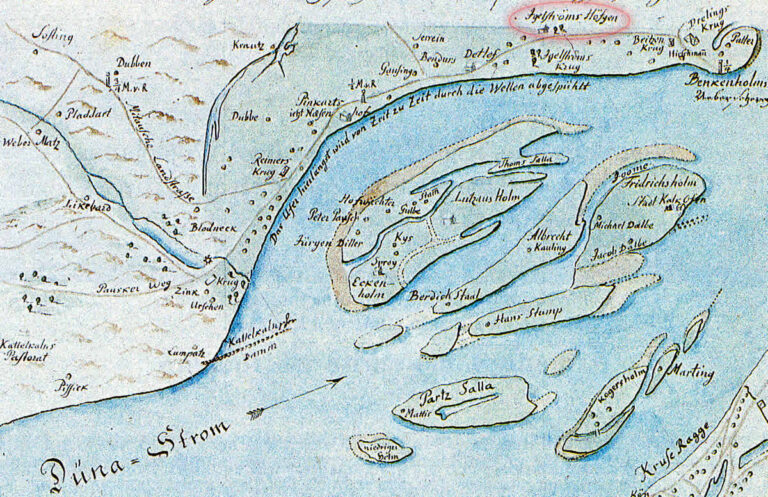
The Lucavsala Island is located in the Daugava River in Riga. This island of about 150 ha is for a large part covered with an allotment garden complex of over 600 plots. As of today many of these allotment gardens are no longer cultivated. Some plots are reclaimed by a new generation of urban gardeners, many are being used as weekend and vacation spaces, and others are illegally occupied as spaces of residence. The allotment complex is under pressure of development. The tip of the island has been remodelled as an urban park, and the land adjacent to the park rezoned for high rise residential and mixed use development. This has led to mobilisation among some of the remaining growers to imagine an alternative future.
“Garden on an Island » by Reinis Hofmanis Photographer Reinis Hofmanis has won an award for his series on Lucavsala, which highlights the importance of this microcosm in the debate on sustainable cities. In essence, Hofmanis offers a distinctive perspective on Lucavsala, presenting each image as a testament to the intricate relationships between humans and their environment. His work encourages us to rethink our relationship with urban fringes and nature.
The place
Lucavsala is an island in the heart of Riga. Upon entering, the air quickly changes: the smell of freshly cut grass, manure, floral aromas, rotting apples, grilled meat… The only reminder that you’re in a city is the distant sound of traffic. This 2 km² plot functions as an autonomous part of Riga, where life unfolds in a solitary, self-contained way, sheltered from random intrusions, yet lively and responsive.
The subject and the tension
The residents cultivate and organise themselves, but the municipality has other ambitions for this territory. It is precisely this tension — between a community that has made this space its own and the urban development projects threatening it — that draws Hofmanis in. Lucavsala is described as a green oasis in the centre of Riga, a colony of small allotment gardens bringing together children, city dwellers caught in their daily routines, organisers of spiritual festivals, homeless people and firebugs — set against the backdrop of urban planners working away in their offices.
Hofmanis’ approach
His work is characterised by a socio-anthropological angle, with a focus on the typology of different social groups, their behavioural patterns and their effects on the environment. Lucavsala is for him an ideal terrain: a human microcosm, almost timeless, nestled within a modern capital. The series was notably exhibited at the Les Boréales festival in Caen, which spotlights Nordic and Baltic cultures. It is a documentary as much as a poetic work on the fragility of these informal living spaces in the face of urban pressure.
References
https://www.agroecologicalurbanism.org/conversation-starters/lucavsala-island
FK Magazine – Reinis Hofmanis, fkmagazine.lv, 2021. https://fkmagazine.lv/2021/06/22/fk-artist-reinis-hofmanis/
Ville de Caen – Exposition : Garden on an Island | Les Boréales, caen.fr. https://www.lesboreales.com/artistes/exposition-garden-on-an-island/
Reinis Hofmanis – Portfolio, reinishofmanis.lv. https://reinishofmanis.lv/work